
For Sarasota and Venice seniors, aging in place in Florida can be safe, comfortable, and fulfilling with the right preparation. This fall, focus on five priorities: preventing falls, preparing for hurricanes, reviewing medications and health needs, building a dependable care team, and planning for holiday visits.
Fall in Florida brings somewhat cooler weather, but hurricane season continues through November. With holiday gatherings approaching and seasonal illnesses on the horizon, a thoughtful plan can protect your loved one’s independence, comfort, and quality of life.
What Makes Fall Important for Aging in Place?
Aging in Place Florida planning is not a single decision. It is an ongoing process that adapts to changing health needs, home conditions, weather risks, and family availability.
This season is an ideal time to ask:
- Is the home still safe for walking, bathing, and moving between rooms?
- Does your loved one have enough medication and medical supplies?
- Who will help if a hurricane causes a power outage or evacuation?
- Are doctor’s appointments, flu vaccinations, and transportation arranged?
- What support is needed if family members live out of state?
Fortunately, small improvements made before a crisis can help a senior remain at home longer with dignity. For families in another state and solo agers without nearby relatives, professional care management adds an essential layer of oversight.
Essential Step 1: How Can You Fall-Proof a Sarasota or Venice Home?
For aging in place Florida plans, begin with a room-by-room safety review. Falls can happen quickly, especially when floors are wet, lighting is poor, or holiday decorations and hurricane supplies create clutter.
Start with these practical improvements:
- Remove loose rugs, clutter, cords, and small furniture from walkways.
- Add brighter bulbs and nightlights in hallways, bedrooms, stairways, and bathrooms.
- Install grab bars near the toilet and inside the shower.
- Use nonslip mats in the bathroom and keep floors dry.
- Store frequently used items between waist and shoulder height.
- Encourage well-fitting shoes with nonskid soles rather than slippers without support.
- Check that canes, walkers, and other mobility devices are correctly adjusted.
- Keep flashlights, phones, and emergency contacts within easy reach.
Florida’s fall weather can also bring rain and slick entryways. Before visitors arrive for the holidays, inspect porches, driveways, and pathways for uneven surfaces, algae, loose pavers, or poor lighting.

A professional aging-in-place assessment in Sarasota can help identify risks that family members may overlook. The goal is not to restrict movement. It is to make everyday movement safer and preserve independence.
Proven Step 2: How Should Florida Seniors Prepare for Hurricanes?
A hurricane plan is central to aging in place Florida safety because hurricane season officially continues through November 30. Seniors and their families should plan for both sheltering at home and evacuating.
According to Ready.gov’s guidance for older adults, emergency planning should account for medications, medical equipment, transportation, communication, and personal support needs.
Create both a Stay Kit and a Go Kit
A Stay Kit should include supplies for remaining safely at home. A Go Kit should be easy to carry if evacuation becomes necessary.
Include:
- Water, ideally at least one gallon per person per day for several days.
- Ready-to-eat food that fits dietary needs and does not require cooking.
- Prescription and over-the-counter medications.
- A current medication and allergy list.
- Flashlights, extra batteries, a radio, and phone chargers.
- A first-aid kit and personal hygiene supplies.
- Extra eyeglasses, hearing-aid batteries, and mobility supplies.
- Copies of identification, insurance cards, advance directives, and physician contacts.
- Cash in small bills.
- Pet or service-animal supplies, if applicable.
If your loved one uses oxygen, a CPAP machine, an electric wheelchair, a nebulizer, or refrigerated medication, create a specific backup-power plan. Ask the equipment provider, pharmacist, and physician what should happen during an extended outage.
Learn the local evacuation zone, identify the safest destination, and discuss transportation before a storm is approaching. Seniors who may need assistance evacuating should contact local emergency-management officials about available registration programs and special-needs resources.
Smart Step 3: What Health and Medication Checks Matter Most?
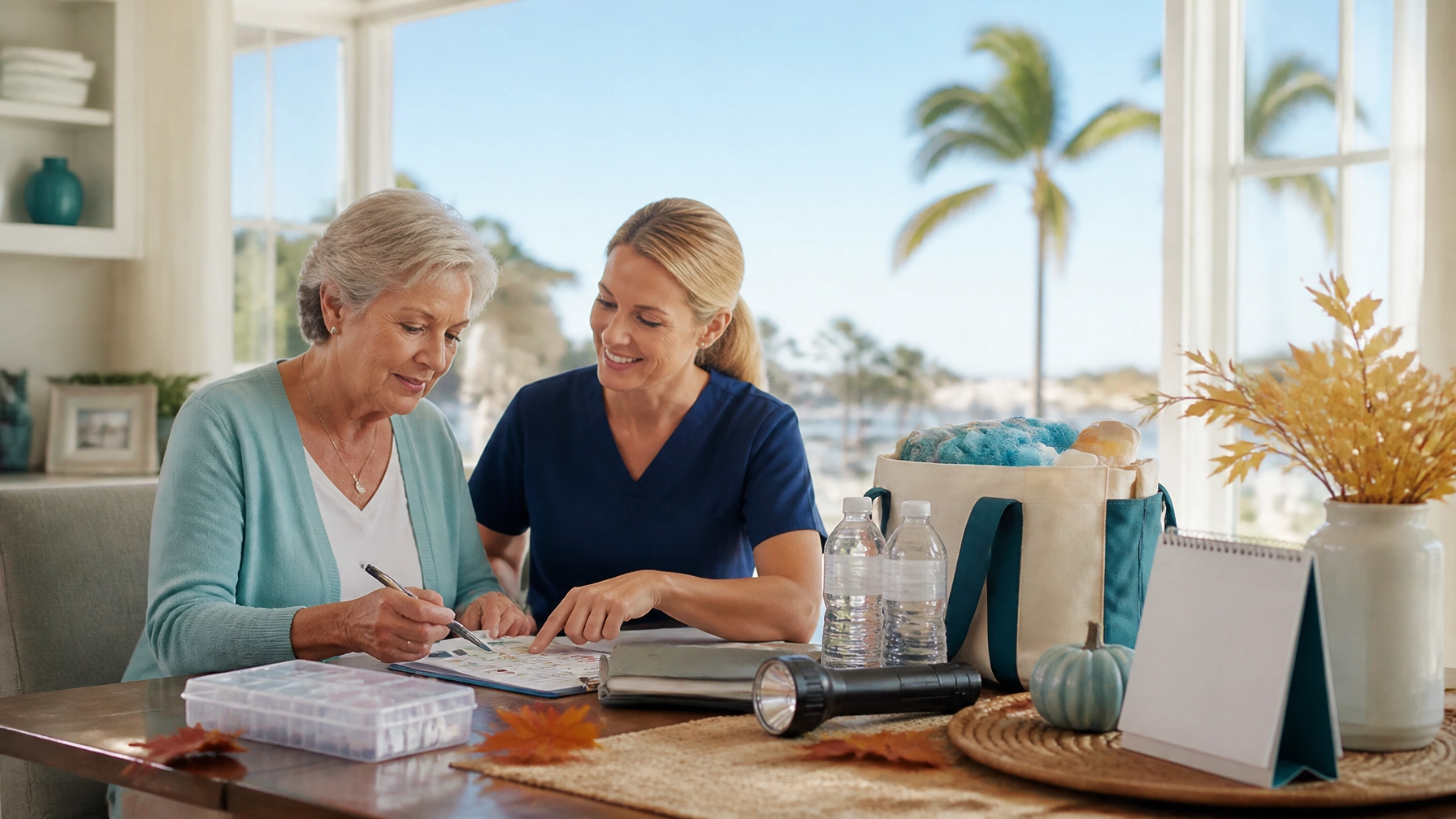
Medication planning makes aging in place Florida safer and less stressful. Fall is a good time to schedule a medication review with a primary care provider or pharmacist, especially after a hospital stay, new diagnosis, or change in symptoms.
Ask the healthcare team to review:
- Every prescription, vitamin, and supplement.
- Duplicate medications or outdated prescriptions.
- Drugs that may cause dizziness, drowsiness, or low blood pressure.
- Whether doses and timing are still appropriate.
- Storage requirements, including refrigeration.
- Refill timing before a hurricane or holiday travel period.
Maintain one written medication list with each drug’s name, dose, purpose, schedule, prescribing provider, pharmacy, and known allergies. Keep copies at home, with the emergency kit, and with a trusted care contact.
Fall health planning should also include vision, hearing, balance, blood pressure, and mobility discussions. Ask whether physical therapy, an assistive device, or a home-safety adjustment could reduce risk.
Older adults should also speak with their healthcare provider or pharmacist about seasonal vaccinations. The CDC’s guidance for adults age 65 and older recommends annual flu vaccination and identifies higher-dose, recombinant, or adjuvanted options as preferred for many adults in this age group. For fall 2026, ask which vaccine and timing are appropriate for your loved one, including whether COVID-19 or RSV vaccination is recommended.

Hand in Hand Care provides medication management for seniors at home, including medication organization, oversight, and communication with healthcare providers.
Powerful Step 4: How Can You Build a Reliable Care Team?
A strong care team supports aging in place Florida plans by making sure no important detail depends on one person. This is particularly important when adult children live in New York, Ohio, or another state: or when a solo ager has no nearby family.
Your care team may include:
- A primary care physician and relevant specialists.
- A pharmacist.
- Family members or trusted friends.
- Home health or personal-care professionals.
- A geriatric care manager.
- A transportation provider.
- A reliable neighbor.
- A legal or financial professional when appropriate.
Write down who handles each responsibility. For example, one person may coordinate appointments, another may receive storm updates, and a nurse-led care manager may monitor medications and communicate changes to the family.
Hand in Hand Care’s Registered Nurse-led team helps bridge the gap between seniors, families, and healthcare providers. With more than 58 years of combined experience, we serve as “professional relatives” for clients who need dependable local advocacy.
Our comprehensive care management services may include one-on-one nursing, appointment reminders, transportation scheduling, health monitoring, and coordination after a hospital or rehabilitation stay.
Essential Step 5: How Can You Prepare for Holidays and Family Visits?
Aging in place Florida should include meaningful connection: not just safety checklists. The approaching holiday season can bring joy, but changes in routine, crowded rooms, travel, decorations, and fatigue may also create stress for older adults.
Before family arrives:
- Keep medication, sleep, and meal schedules consistent.
- Make a quiet room available for rest.
- Remove boxes, cords, decorations, and luggage from walkways.
- Place frequently used items within easy reach.
- Discuss transportation and appointment needs in advance.
- Ask visitors to watch for changes in balance, confusion, appetite, or mood.
- Include your loved one in decisions instead of making assumptions for them.
Family visits can also reveal changes that are difficult to notice from a distance. If your parent appears less steady, is missing medications, or seems overwhelmed by ordinary tasks, treat those observations as useful information: not criticism.
FAQ: What Should Sarasota Families Know?
Is aging in place safe during Florida hurricane season?
It can be, provided the home is not in an evacuation situation and the senior has supplies, communication, transportation, medication, and backup-power plans. Follow official evacuation orders and consult local emergency-management guidance.
How much medication should a senior keep for a storm?
Ask the prescribing provider and pharmacist about an appropriate emergency supply. FEMA and senior-preparedness guidance commonly emphasize having at least several days of medication available, with additional supplies considered when possible.
When should older adults get a flu shot?
Many older adults are advised to receive the flu vaccine in September or October, but timing can depend on individual health needs and vaccine availability. Confirm the best timing and formulation with a healthcare professional.
Can a care manager help an out-of-state family?
Yes. A geriatric care manager can provide local oversight, coordinate appointments and services, communicate with family members, and identify changes that may require medical attention.
What areas does Hand in Hand Care serve?
Hand in Hand Care primarily serves seniors and families throughout Sarasota County, including Sarasota and Venice, Florida.
Next Step: How Can Hand in Hand Care Help?
With a thoughtful plan, aging in place Florida can support greater independence, comfort, and peace of mind. You do not have to manage every appointment, medication question, storm concern, or family update alone.
Hand in Hand Care
📍 Sarasota, FL
📞 941-363-1809
🌐 www.handinhandcare.net
If you are concerned about a loved one’s safety at home, contact Hand in Hand Care to schedule a consultation. Our compassionate, RN-led team can help your family create a safer and more sustainable plan for aging at home in Sarasota or Venice.

